


Table Mountain Electric
Trusted Experts in Denver EV Charger Installation
Nestled in the heart of the Mile-High City, Table Mountain Electric specializes in providing top-notch electrical services to the Denver Metro area and beyond. One of the services we are proud to offer is the installation of electric vehicle (EV) charging stations in Denver. Our team of skilled, licensed electricians is dedicated to providing Denver residents with efficient and reliable electric vehicle charging solutions.


Choosing the Right Type of Charging Station
Electric Vehicle (EV) chargers come in several types, each with different specifications and charging speeds. Choosing the right charger for fully electric cars takes some considerations. For residential or commercial use, the most common types are:
Level 1 EV Charger Installation in Denver
These home EV chargers can be plugged into a standard 120-volt outlet, making them the most accessible type of EV charger. However, they charge slowly, generally providing about 4 to 5 miles of range per hour of charging, which makes them suitable for overnight charging or for minimally used EVs.
Level 2 EV Charger Installation in Denver
These require a 240-volt supply (similar to what large appliances like dryers use) and are much faster than Level 1 chargers. They typically provide about 20 to 30 miles of range per hour of charging, making them ideal for daily use. Table Mountain Electric specializes in professional installation of Level 2 EV chargers, which are ideal for homeowners or businesses looking to reduce charging time and enhance convenience.
DC Fast Chargers for Electric Vehicles
These are primarily used in commercial and industrial settings due to their high power requirements and rapid charging capabilities. They can charge an EV’s battery to 80% in just 20 minutes.
Level 1 vs. Level 2 EV Chargers: Which Is Right for Your Home?
Choosing between a Level 1 and Level 2 charger usually comes down to how quickly you need to charge, how often you drive, and what your home’s electrical system can support.
| Feature | Level 1 EV Charger | Level 2 EV Charger |
| Power Supply | Standard 120-volt outlet | Dedicated 240-volt circuit |
| Typical Charging Speed | About 3–5 miles of range per hour | About 20–30 miles of range per hour |
| Best For | Plug-in hybrids, short commutes, occasional charging | Daily EV drivers, longer commutes, faster overnight charging |
| Electrical Work | Often minimal if a suitable outlet already exists | Usually requires professional installation |
| Panel Capacity Review | Usually limited | Recommended before installation |
| Convenience | Slower but simple | Faster and better suited to everyday use |
For many Denver homeowners, Level 2 EV charging offers the best balance of speed and convenience. A dedicated 240-volt charger can replenish significantly more range overnight, making it easier to start each day with a charged vehicle.
That said, not every home needs the same solution. If you drive only a few miles each day or own a plug-in hybrid, Level 1 charging may be sufficient. Table Mountain Electric can evaluate your vehicle, driving habits, charger location, and electrical panel capacity to help determine the most practical setup for your home.
What To Expect During EV Charger Installation
The exact installation timeline depends on your home’s electrical system, charger location, permitting requirements, and whether additional electrical upgrades are needed. However, most residential projects follow a similar process.
Consultation and Site Evaluation
We begin by discussing your vehicle, preferred charger, parking location, and daily charging needs. Our electrician evaluates your electrical panel, available breaker space, existing electrical load, and the distance between the panel and the proposed charger location.
This assessment helps determine whether your home can support a Level 2 charger as-is or whether additional work may be required.
Step 2
Charger and Installation Planning
Once we understand your electrical system, we plan the installation around the charger’s power requirements and your property layout.
Factors that can affect the scope include:
- Charger amperage
- Distance from the electrical panel
- Indoor or outdoor placement
- Wall and ceiling access
- Conduit requirements
- Trenching for detached garages or exterior locations
- Electrical panel capacity
We’ll explain the recommended approach and provide a quote before work begins.
Step 3
Permitting, When Required
Depending on the jurisdiction and scope of the project, an electrical permit may be required. Permit and inspection timelines vary throughout the Denver Metro Area, so this step can influence the overall project schedule.
Step 4
Professional Installation
For many straightforward residential projects, the physical EV charger installation can be completed in a single service visit. Our licensed electricians install the dedicated circuit, wiring, breaker, charging equipment, and any necessary mounting or conduit.
More complex installations, such as long wire runs, trenching, or electrical panel upgrades, may require additional time.
Step 5
Testing and Final Setup
Once the charger is installed, we test the system to confirm it is operating properly and that the electrical connections are secure. If your charger includes smart features, you can then complete any app, Wi-Fi, or charging schedule setup recommended by the manufacturer.
With proper planning and professional installation, you’ll be ready to charge conveniently from home without depending on public charging for your daily routine.
Benefits of Home Electric Car Charger Installation to Denver Homeowners
When it comes to installing an EV charger, there are numerous benefits that extend beyond simple convenience. These include:
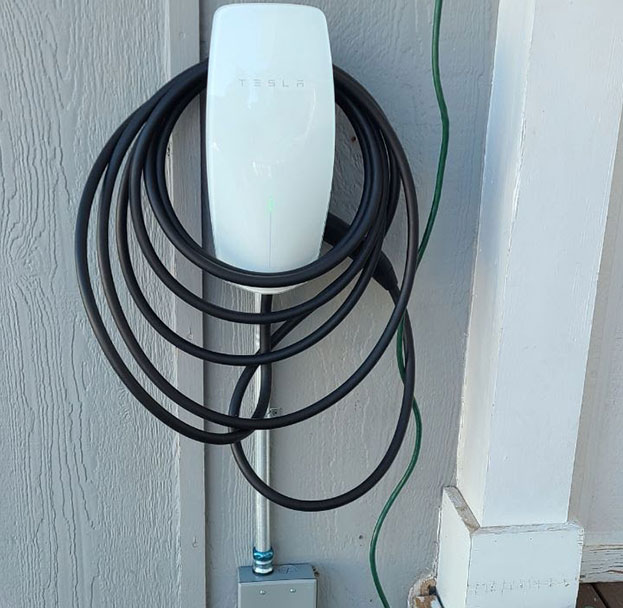
Environmental Impact
Electric car charger installation in Denver aligns with a growing consumer trend toward sustainability. By facilitating more frequent and convenient use of electric vehicles, EV chargers help reduce greenhouse gas emissions and dependence on fossil fuels.
When paired with a household or business that uses renewable energy sources, such as solar panels, EV chargers can operate on clean energy, further reducing environmental impact and supporting global sustainability efforts.
How Long Does It Take To Install EV Charging?
Typically, the process begins with a site visit to assess your electrical system and discuss your specific needs, usually completed within a week of initial contact. The actual installation of some home chargers can be completed in as little as one day, depending on the complexity of the electrical system and the readiness of the site.
Why Choose Us for Electric Vehicle Charging
Frequently Asked Questions About EV Charger Installation in Denver
Do I Need a Licensed Electrician to Install an EV Charger?
Can My Home’s Electrical Panel Handle a Level 2 Charger?
How Much Does EV Charger Installation Cost in Denver?
How Long Does It Take to Install a Home EV Charger?
Where Should an EV Charger Be Installed in My Home?
What Type of EV Charger Is Best for Daily Use?
Do EV Chargers Work With All Electric Vehicles?
Do I Need a Permit for EV Charger Installation in the Denver Metro Area?
Yes, EV charger installations typically require an electrical permit to ensure the work meets safety standards. Table Mountain Electric handles permitting and code compliance so you don’t have to worry about the details.
Can EV Chargers Be Installed for Commercial Properties or Multifamily Buildings?
Get In Touch
Table Mountain Electric is ready to light up your life. Your safety and satisfaction are our top priorities. Message us or Call Today for exceptional installation service!
